
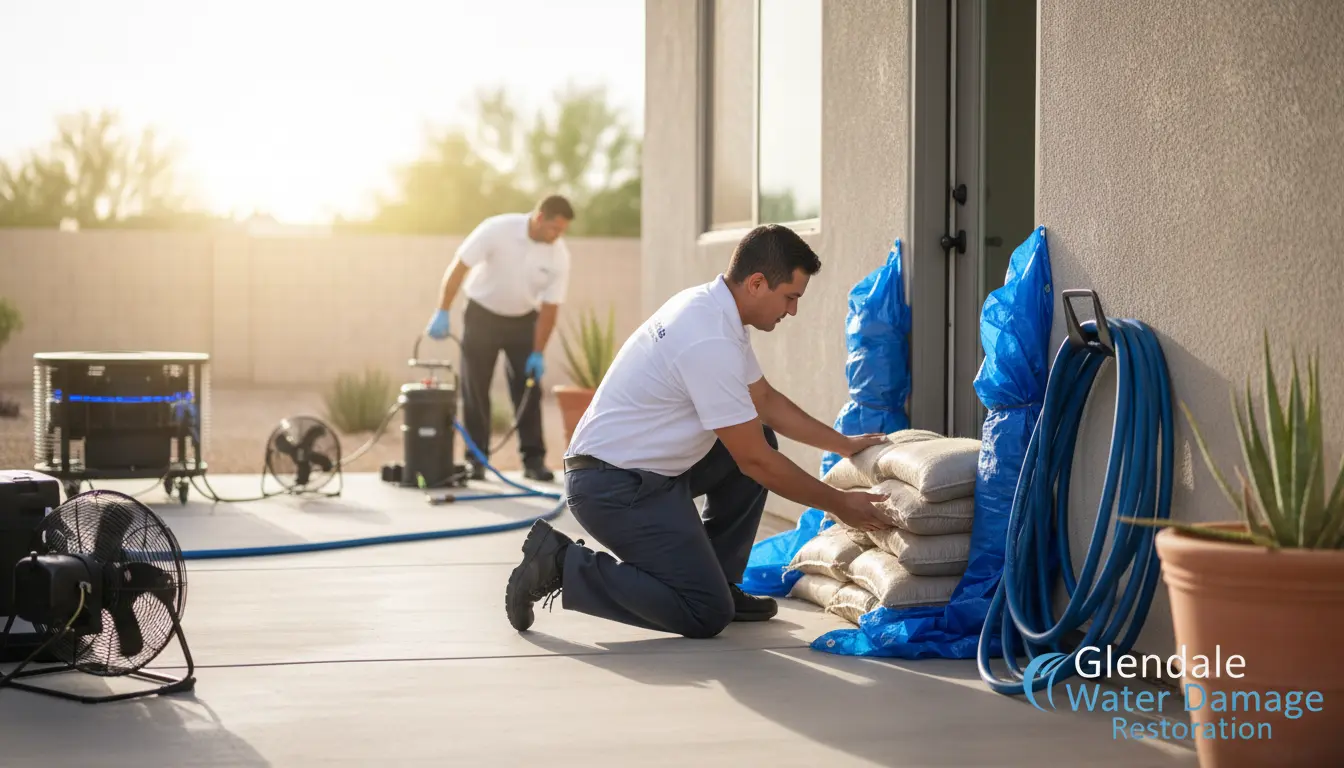
Living in Arizona means dealing with the unpredictable forces of nature, especially during monsoon season when heavy rains can turn streets into rivers and homes into waterlogged nightmares. If you’re in Glendale, you’ve likely seen the impacts firsthand—flooded yards in neighborhoods like Thunderbird or standing water in West Glen. But fear not! At Glendale Water Damage Restoration, we’ve helped countless homeowners in the area bounce back from flood disasters. In this guide, we’ll share our top 7 practical tips to prevent flood damage, so you can keep your property safe and dry. Whether it’s a sudden downpour or a plumbing mishap, these strategies will empower you to stay one step ahead.
Arizona’s desert climate might seem arid, but flash floods are a real threat due to the region’s hard-packed soil and intense rainfall. According to local experts, Glendale sees an average of 8-10 inches of rain annually, much of it concentrated in summer storms. Proactive prevention not only saves you money on repairs but also minimizes stress. Let’s dive into these actionable tips, tailored for Glendale residents.
Understanding Flood Risks in Glendale
Before we jump into the tips, it’s essential to grasp why floods hit Arizona so hard. The state’s monsoon season, typically from July to September, brings thunderstorms that dump inches of rain in hours. In Glendale, low-lying areas near the Agua Fria River are particularly vulnerable. Poor drainage systems exacerbated by urban development can lead to rapid water accumulation. If you’ve experienced water intrusion in your Westwood home, you know the urgency of preparation. By addressing these risks head-on, you can avoid the need for emergency interventions like our 24/7 Emergency Response services.
Top 7 Tips to Prevent Flood Damage
1. Elevate Your Appliances and Valuables
One of the simplest yet most effective ways to shield your home is by elevating key items off the ground. In Glendale’s flat terrain, even minor flooding can seep into basements or garages. Place washers, dryers, water heaters, and electronics on sturdy platforms or cinder blocks, raising them at least 12-18 inches. For irreplaceable items like family photos or documents, invest in waterproof storage bins and store them on high shelves.
Local tip: During Glendale’s summer monsoons, we’ve seen elevated appliances save families in Litchfield Park from thousands in replacement costs. If water does get in, our Pack-Out Services can help safely remove and store your belongings during cleanup.
2. Install Sump Pumps and Backwater Valves
Sump pumps are your home’s first line of defense against rising groundwater. Install one in your basement or crawl space to automatically pump out excess water. Pair it with a battery backup for power outages, common during Arizona storms.
Backwater valves prevent sewage from backing up into your drains during heavy rains—a frequent issue in older Glendale homes. These one-way valves allow outflow but block reverse flow. Consult a professional plumber to ensure proper installation, as DIY errors can lead to bigger problems.
Pro advice: In flood-prone areas like Surprise, we’ve recommended these to prevent mold remediation services down the line. Regular maintenance, like annual checks, keeps them functioning optimally.
3. Maintain Your Gutters and Downspouts
Clogged gutters are a silent flood culprit. Leaves, debris, and even desert dust can block them, causing water to overflow and damage foundations. Clean your gutters twice a year—spring and fall—and extend downspouts at least 5-10 feet from your home to direct water away.
In Glendale, where palm fronds and monsoon winds add extra debris, consider gutter guards to reduce cleaning frequency. This simple step can prevent water from pooling near your walls, avoiding costly structural repairs.
4. Landscape Strategically for Better Drainage
Your yard’s design plays a huge role in flood prevention. Grade your landscape to slope away from the house, ensuring water flows toward streets or drains rather than under your foundation. Plant water-absorbent native plants like mesquite or agave, which thrive in Arizona’s soil without exacerbating runoff.
Avoid overwatering lawns, as it contributes to soil saturation. In Glendale communities, permeable pavers for driveways allow water to seep through instead of pooling. If you’re in a neighborhood like West Glen, check local ordinances for eco-friendly drainage solutions.
5. Seal Cracks and Gaps in Your Foundation
Arizona’s expansive clay soils can shift, creating cracks in foundations that let water in. Inspect your home’s exterior annually for fissures in walls, windows, and doors. Use hydraulic cement or silicone caulk to seal them effectively.
For larger issues, professional foundation waterproofing is key. We’ve assisted Glendale homeowners with this preventive measure, preventing minor leaks from turning into major flood damage cleanup jobs.
6. Know Your Flood Zone and Get Insurance
Not all Arizona homes are equal in flood risk. Use FEMA’s flood maps to determine if your Glendale property is in a high-risk zone. Standard homeowners insurance often excludes floods, so add a separate policy through the National Flood Insurance Program (NFIP) or private insurers.
Local insight: Areas near the White Tank Mountains, like parts of Litchfield Park, face higher risks. If disaster strikes, our Insurance Claim Assistance team can guide you through the process seamlessly.
7. Create a Flood Emergency Plan
Preparation is power. Develop a family plan: designate a safe meeting spot, assemble an emergency kit with sandbags, tarps, and flashlights, and know how to shut off utilities. Monitor local alerts via the Glendale Emergency Management app during monsoon season.
Practice evacuations and keep important documents in a go-bag. For businesses in Thunderbird, include employee protocols. This readiness can mean the difference between quick recovery and prolonged disruption.
FAQ: Common Questions About Flood Prevention in Arizona
What Causes Most Floods in Glendale?
Monsoon storms are the primary culprit, but plumbing failures and poor drainage also contribute. Heavy rains overwhelm the area’s arroyo systems, leading to flash flooding.
How Much Does Flood Prevention Cost for a Glendale Home?
Basic measures like gutter cleaning cost $100-200, while sump pumps run $500-1,500 installed. It’s far cheaper than restoration, which can exceed $10,000.
Can I Prevent Flood Damage from Happening Indoors?
Yes! Use door sweeps, elevate furniture, and install flood barriers. For persistent issues, professional assessments from Glendale Water Damage Restoration can identify vulnerabilities.
What Should I Do Immediately After a Flood?
Evacuate if unsafe, then contact professionals for 24/7 Emergency Response. Avoid electrical hazards and don’t use wet appliances.
Is Mold a Concern After Floods in Arizona’s Dry Climate?
Absolutely—humidity from water damage promotes mold growth quickly. Act fast with mold remediation services to protect health.
Conclusion: Stay Proactive and Protected
Flood damage doesn’t have to devastate your Glendale home. By implementing these top 7 tips—from elevating valuables to crafting an emergency plan—you can significantly reduce risks and enjoy Arizona’s beauty without worry. At Glendale Water Damage Restoration, we’re committed to serving our community with expert advice and rapid response. If you’re ready to assess your home’s flood readiness or need help with any water issues, contact us today for a free consultation. Don’t wait for the next storm—protect what matters most now!